
How CNC Machining Creates "Millimeter-Level Light and Shadow" for Photography Equipment Parts When a cinema lens still maintains smooth focusing after an 8-hour tracking shot on a snow mountain at -20…
(Content in this language is being translated. Showing English version.)
When a cinema lens still maintains smooth focusing after an 8-hour tracking shot on a snow mountain at -20°C, and when a heavy-duty tripod gimbal can still achieve 0.1° fine adjustment while carrying 15 kg of equipment, the real technical support behind these experiences often lies not in optical design or electronic stabilization, but in those photography equipment parts precisely machined by CNC machining—lens mounts, gimbal bases, quick-release plates, and follow-focus gears, each redefining the physical boundaries of imaging creation.
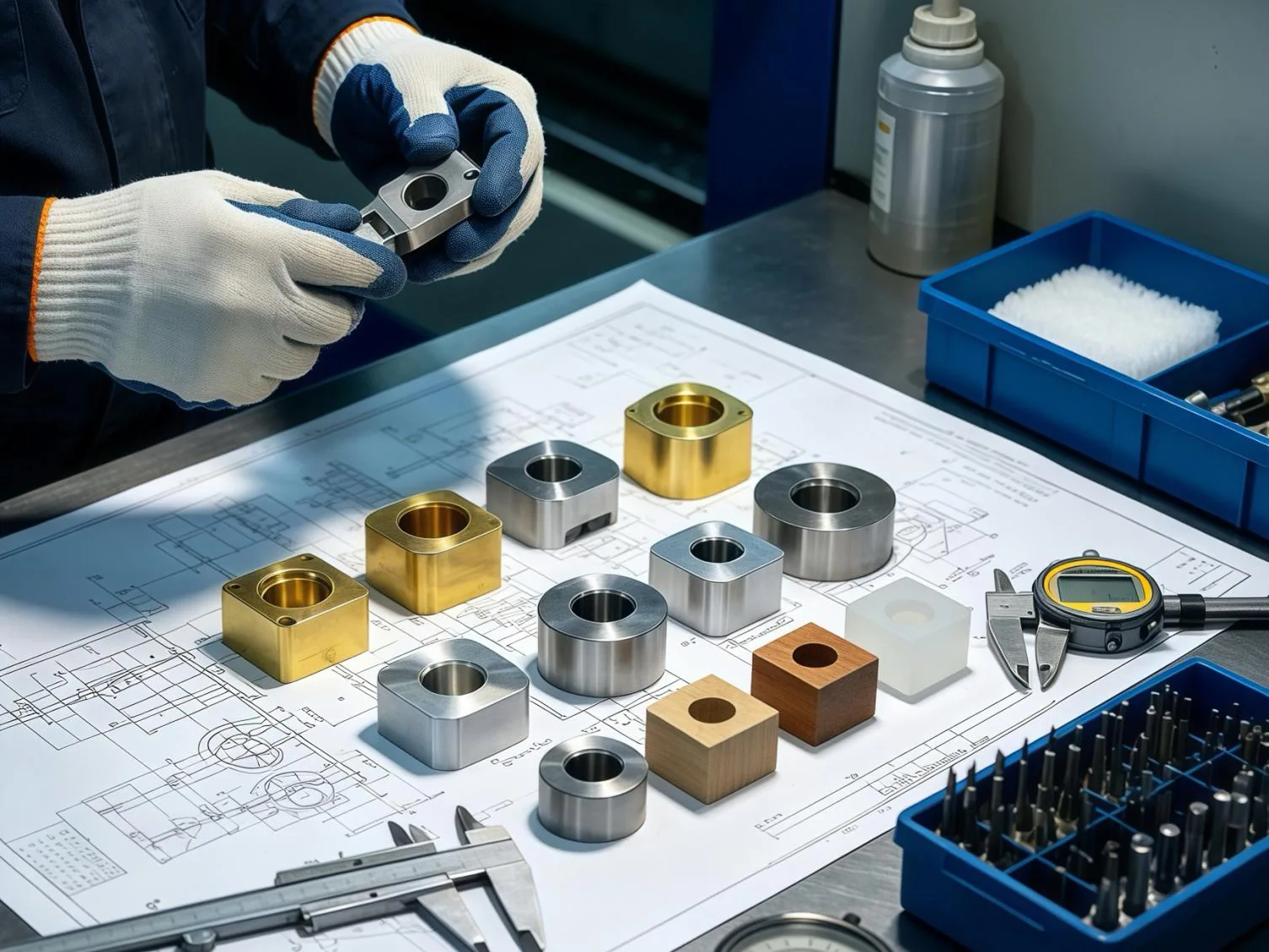
1. Why CNC Machining Is a Core Process for Manufacturing Photography Equipment Parts
The underlying logic of photography equipment manufacturing revolves around one core contradiction: how to make every part as light and durable as possible while ensuring structural rigidity and precision. CNC machining has become a primary process for manufacturing photography equipment parts because it strikes the best balance among dimensional precision, material compatibility, and structural design freedom.
Take the lens mount as an example—it is one of the parts with the highest precision requirements in photography equipment. The flange focal distance tolerance between the camera body and the lens is usually required to be controlled within ±0.01 mm, and the flatness of the mount surface must reach the 0.005 mm level. Once the mount machining precision is insufficient, the optical axis will shift after the lens is installed, resulting in reduced edge sharpness and a tilted focus plane. The precision milling and boring capabilities of CNC machining are precisely the technical guarantee that keeps such errors within the tolerance range of the optical system.
For photography gimbals and stabilizers, the precision requirements are equally stringent. Once the coaxiality error of the gimbal base exceeds 0.02 mm, visible image drift will occur during telephoto shooting or time-lapse photography. CNC-machined gimbal parts can eliminate these errors at the micron level before assembly.
2. From 6061 Aluminum to Titanium Alloy: Material Strategies for CNC Machining Photography Equipment
Material selection is the first step in CNC machining photography equipment. Different materials correspond to different machining strategies, tool solutions, and surface treatment processes.
2.1. 6061 Aluminum Alloy: The "Workhorse Material" for Photography Equipment
6061 aluminum alloy is the most common material in photography equipment. It has moderate strength, excellent machinability, and an outstanding finish after anodizing. It is widely used in quick-release plates, camera cages, monitor mounts, and gimbal bases. 6061 aluminum can achieve lightweighting while ensuring structural rigidity. A standard quick-release plate can be controlled to weigh within 80 g while carrying equipment weighing over 10 kg. After hard anodizing, the surface of CNC-machined 6061 parts can reach a hardness of above HV300, enough to resist wear caused by frequent mounting and dismounting.
2.2. 7075 Aluminum Alloy: The First Choice for High-Load Areas
7075 aluminum alloy is used for higher-load critical parts, such as heavy-duty gimbal bases, lens support brackets, and cinema camera top handles. Its strength is close to that of steel, but its weight is only one-third that of steel, and its yield strength is about 70% higher than that of 6061 aluminum alloy. For lens support systems that need to bear the weight of large cinema lenses, CNC-machined 7075 aluminum parts can maintain structural integrity under extreme loads without deformation.
2.3. Titanium Alloy Ti-6Al-4V: An Advanced Choice for High-End Equipment
Titanium alloy Ti-6Al-4V is increasingly being used in high-end photography equipment. Some top-tier tripod bowls, gimbal spindles, and quick-release plate locking mechanisms are beginning to use titanium alloy CNC-machined parts. Titanium alloy has a specific strength far higher than aluminum alloy and excellent corrosion resistance, performing outstandingly in harsh shooting environments such as seawater and sand. However, its machining difficulty increases significantly—cutting heat is concentrated and tool wear is fast, requiring specialized low-speed, high-torque cutting strategies and sufficient cooling solutions.
2.4. Stainless Steel 303/304: Precision Locking and Shaft Parts
Stainless steel 303/304 is mostly used for threaded inserts, locking screws, and precision shafts. CNC-machined stainless steel parts have excellent wear resistance and anti-galling performance, making them ideal for gimbal locking mechanisms and quick-release plate spring clips.
3. Five-Axis Simultaneous Machining and Thin-Wall Machining: Core Challenges in CNC Machining Photography Equipment Parts
Photography equipment parts share a common feature: thin walls, lightweighting, complex surfaces, and high surface quality coexisting. These features pose technical challenges to CNC machining far beyond conventional machining.
Five-Axis Simultaneous Machining: Completing Multi-Face Precision Machining in One Setup
The advantages of five-axis CNC machining in photography equipment manufacturing are particularly prominent. It can complete multiple faces, irregular holes, and lightening slots of a gimbal base in a single setup, avoiding precision loss caused by repeated positioning. For parts such as lens mounts, which have extremely high coaxiality requirements, five-axis machining can simultaneously complete mount inner-hole boring, flange surface milling, and bayonet slot machining, ensuring that coaxiality and perpendicularity reach design tolerances before assembly. Some professional photography equipment machining workshops use five-axis machining centers. Key dimensions can be tightened to tolerances of 0.005 mm, and surface roughness can reach Ra 0.4 μm, meeting optical-grade assembly requirements.
4. Surface Treatment and Quality Inspection: Making CNC Machining Photography Equipment Parts "Stand Up to Close-Ups"
Photography equipment parts must not only be highly precise but also have a refined appearance and be durable and reliable. Surface treatment is the "last line of defense" for CNC machining photography equipment parts and an important marker distinguishing professional equipment from ordinary accessories.
4.1. Anodizing and Micro-Arc Oxidation: Dual Guarantees of Wear Resistance and Texture
Aluminum alloy photography parts generally use hard anodizing, forming an oxide film above HV300 on the surface. This not only improves corrosion resistance but also enhances surface hardness to resist scratches caused by frequent mounting and dismounting. For gimbal spindles and locking mechanisms that require higher wear resistance, micro-arc oxidation (ceramic coating) and electroless nickel plating are common supplementary solutions. Some high-end photography equipment also uses a combined sandblasting + anodizing process to obtain a fine matte texture while improving surface fingerprint resistance.
4.2. CMM Coordinate Measuring and Assembly Testing: The Final Gate for Precision Verification
In terms of quality inspection, the testing of CNC machining photography equipment parts usually covers CMM coordinate measuring machine inspection, projector contour measurement, and surface roughness verification. For critical parts such as lens mounts and gimbal bases, assembly interference testing and load fatigue testing are also required to ensure that parts will not loosen, deform, or experience precision degradation during long-term use. Some professional machining factories also perform salt spray testing on quick-release plates and camera cages to verify the corrosion resistance of surface treatments in humid environments.
5. Conclusion: The Boundaries of Imaging Creation Are Defined by the Precision of CNC Machining
The global photography equipment market continues to grow. From professional cinema cameras to consumer mirrorless cameras, from handheld stabilizers to heavy-duty tripods, behind every piece of equipment are dozens or even hundreds of CNC-machined precision parts supporting its performance.
When a lens's focus ring rotation damping changes from "slightly loose" to "silky and precise," when a gimbal can still achieve 0.1° fine adjustment while carrying 15 kg of equipment, and when a quick-release plate can still lock quickly on a snow mountain at -20°C—the source of these experience leaps is not some "black technology," but lens mount coaxiality controlled within 0.005 mm, gimbal base flatness reaching 0.003 mm, and quick-release plate locking mechanisms having passed 5,000 fatigue tests—these engineering precisions, polished inch by inch by CNC machining, are the truly reliable physical foundation for imaging creation.