
The Role of CNC Machining in High-Performance Drone Systems In the rapidly evolving drone industry, performance, stability, and durability are the core competitiveness of modern UAV systems. Whether f…
(Content in this language is being translated. Showing English version.)
In the rapidly evolving drone industry, performance, stability, and durability are the core competitiveness of modern UAV systems. Whether for commercial aerial photography, industrial inspection, agricultural mapping, logistics delivery, or military surveillance, high-performance drones require ultra-precise, lightweight, and highly consistent mechanical structures. Among all manufacturing technologies, CNC machining stands out as the most reliable solution for producing core drone components, becoming an indispensable foundation for advanced drone system performance.
1.Why High-Performance Drones Depend on Precision Manufacturing
A drone is a highly integrated precision flying device. Its flight stability, load capacity, vibration resistance, and service life are all determined by the accuracy of mechanical parts. Unlike consumer toy drones, industrial and high-performance UAVs work in complex environments with high-speed flight, strong wind resistance, and long-duration operation.
Even tiny dimensional errors, uneven assembly gaps, or insufficient structural rigidity will lead to severe problems: flight jitter, blurry aerial imaging, inaccurate sensor data, shortened component lifespan, and even flight failure.
Traditional manufacturing methods such as casting and 3D printing cannot meet the strict tolerance and strength requirements of high-end drone systems. Only CNC machining can achieve micron-level precision, excellent structural consistency, and superior mechanical properties, perfectly matching the rigorous standards of high-performance drone manufacturing.
2.Core Drone Components Realized by CNC Machining
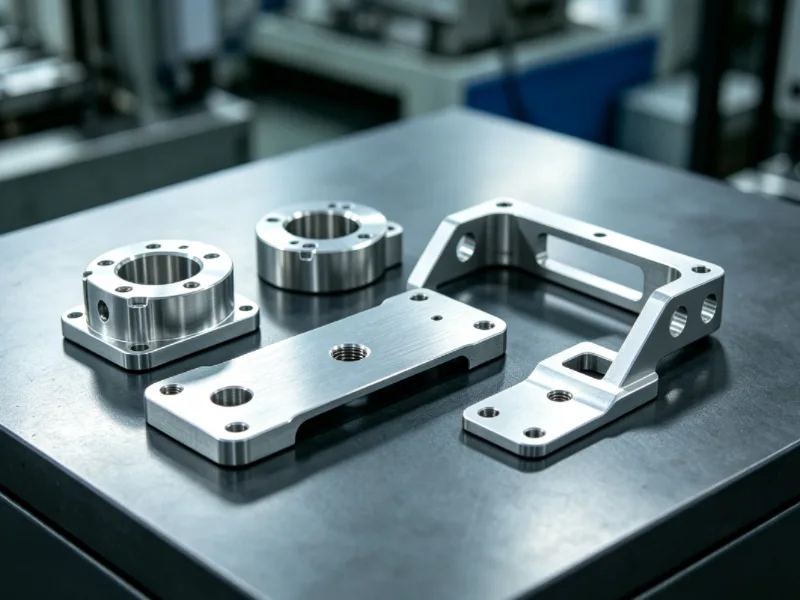
Almost all load-bearing, vibration-resistant, and positioning-critical parts of high-performance drone systems rely on custom CNC machining. These key components determine the overall operating performance of the UAV:
1. Drone Frame and Arm Connectors
The frame is the skeleton of a drone system. CNC-machined aluminum alloy connectors ensure tight matching between carbon fiber arms and the central frame. Precise cutting and hole positioning eliminate assembly gaps, effectively reducing flight vibration and improving overall structural rigidity.
2. Motor Mounts and Fixed Base Plates
Motor operation stability directly affects propeller rotation balance. CNC-processed motor mounts feature flat and vertical precision surfaces, ensuring vertical installation of motors. This avoids eccentric rotation, reduces flight vibration, and greatly improves hovering stability.
3. Gimbal and Camera Bracket Components
For photography and surveying drones, gimbal stability is the key to high-definition imaging. CNC ultra-precision machining ensures the flatness and parallelism of gimbal mounting surfaces. It isolates high-frequency vibration generated by flight, guaranteeing stable and clear shooting footage.
4. Payload Mounting and Sensor Adapter Parts
High-performance drones are usually equipped with LiDAR, high-definition cameras, thermal imaging sensors and other precision payloads. CNC-machined adapter plates achieve standardized and high-precision installation positions, ensuring accurate sensor data collection and stable payload operation.
5. Heat Sink and Heat Dissipation Structural Parts
High-power drones generate huge heat during long-term operation of ESC and power systems. CNC finely processed aluminum heat sinks form dense heat dissipation structures, effectively improving heat exchange efficiency, preventing equipment overheating, and ensuring continuous stable operation of the drone system.
6. Landing Gear Structural Accessories
CNC-machined landing gear parts have high strength and toughness. They can effectively buffer the impact force during landing, protect the fuselage and precision internal components, and improve the safety and durability of high-performance drones.
3.Superior Material Advantages of CNC Drone Parts
Material selection is crucial for drone lightweight and high-strength design, and CNC machining is compatible with multiple high-performance metal materials tailored for UAV systems:
- Aluminum Alloy 6061: Cost-effective and versatile, with good machinability, corrosion resistance and moderate strength. Widely used in conventional frame connectors and non-load-bearing structural parts.
- Aluminum Alloy 7075: Aerospace-grade aluminum with ultra-high strength and light weight. It is the preferred material for high-load components such as racing drone frames and heavy-duty industrial drone structural parts.
- Titanium Alloy: Features ultra-high strength, low density and strong corrosion resistance. Suitable for military and high-end customized drone core parts that pursue extreme performance.
- Stainless Steel: Used for small precision fasteners and threaded accessories to improve the overall assembly firmness of the drone system.
All CNC machined drone parts can be processed with anodizing, sandblasting, oxidation and other surface treatments to enhance wear resistance, corrosion resistance and appearance texture, adapting to various harsh working environments.
4.How CNC Machining Optimizes Overall Drone System Performance
1. Achieve Extreme Lightweight Design
CNC machining supports complex hollowing, thinning and grooving processes. On the premise of ensuring structural strength, it removes redundant materials to the greatest extent, reduces the overall weight of the drone, improves flight endurance, and increases effective load capacity.
2. Strict Tolerance Ensures Flight Consistency
CNC machining can stably control the tolerance within ±0.02mm. Mass-produced parts have completely consistent dimensions, ensuring consistent center of gravity and assembly accuracy of each drone. It avoids performance differences between individual devices and realizes standardized batch production of high-performance drone systems.
3. Effectively Suppress Flight Vibration
Precision-fit CNC components eliminate assembly gaps and structural looseness. The integrated rigid structure greatly reduces resonance and vibration during high-speed flight, optimizing the working state of sensors, gimbals and electronic systems.
4. Improve System Stability and Service Life
High-precision and high-strength CNC structural parts reduce component wear and fatigue damage during long-term operation. They enhance the wind resistance, impact resistance and environmental adaptability of the drone system, and extend the overall service life of high-performance UAVs.
5.CNC Machining vs 3D Printing for Drone Manufacturing
Many drone developers choose 3D printing for prototype verification due to its fast molding speed. However, for formal production and high-performance drone systems, CNC machining has irreplaceable advantages:
3D printing has poor part density, low surface precision and obvious layer lines, with large tolerance errors and unstable mechanical strength. It is only suitable for low-load prototype parts and decorative shells.
In contrast, CNC machined drone parts have dense metal texture, uniform mechanical properties, ultra-high dimensional accuracy and smooth surface. They fully meet the strength, precision and stability requirements of industrial-grade and high-performance drone mass production.
6.Conclusion
High-performance drone systems are a combination of electronic control technology and precision mechanical manufacturing. While intelligent flight control systems realize autonomous flight, CNC precision machining provides the most solid mechanical guarantee for drone stability, durability and comprehensive performance improvement.
From lightweight structural optimization and vibration suppression to high-precision sensor matching and harsh environment adaptation, CNC machining runs through the whole manufacturing process of high-end drones. As industrial drones continue to develop towards high load, long endurance and high precision, CNC precision manufacturing technology will always be the core cornerstone of high-performance drone system upgrading and iteration.