

Why CNC Machining Is Non-Negotiable for High-Performance Drone UAV Components
2026-07-16
Introduction
Modern drones, whether lightweight racing FPV models, heavy-lift industrial survey UAVs, or long-endurance agricultural spray drones, rely entirely on precision hardware to deliver stable flight, extended battery life, and reliable payload performance. While 3D printing, plastic injection molding and die casting offer low-cost alternatives for simple housings, computer numerical control (CNC) machining remains the gold standard for critical drone accessories. Every core load-bearing, vibration-resistant, heat-dissipating drone component demands micron-level dimensional accuracy that only CNC manufacturing can consistently provide. This article breaks down why top drone OEMs and R&D teams prioritize CNC machined parts and what advantages this production method brings to UAV hardware design.
Table of Contents
|
1. Unmatched Precision Meets Strict Drone Tolerance Requirements |
|
2. Superior Strength-to-Weight Ratio for Extended Flight Time |
|
3. Excellent Thermal Management for Drone Electronics |
|
4. Customization Flexibility for OEM & ODM Drone Projects |
|
5. Durable Surface Finishes Optimized for Outdoor Drone Operation |
|
6. Hidden Risks of Choosing Non-CNC Parts for Core Drone Hardware |
|
7. Conclusion |
1. Unmatched Precision Meets Strict Drone Tolerance Requirements
Drones operate under continuous vibration from brushless motors, rapid acceleration during flight, and variable outdoor temperature shifts. Even minor dimensional deviations can trigger severe issues: shaky gimbal footage, loose propeller hubs, unstable arm connections, or overheated ESCs.
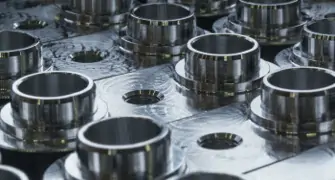
CNC milling and turning hold tight tolerances down to ±0.001mm for key drone accessories, including motor mounts, gimbal brackets, flight controller heat sinks and landing gear connectors. Multi-axis CNC machines process complex curved and thin-wall geometries in one single setup, eliminating assembly gaps that would otherwise amplify vibration mid-flight.
Unlike additive manufacturing, which often suffers from layer-line inaccuracies and dimensional shrinkage, CNC machining cuts solid metal blanks into finished parts, delivering repeatable precision from prototype to mass production. Every batch of machined drone components matches the original CAD drawing perfectly, removing unpredictable flight risks caused by inconsistent part sizes.
2. Superior Strength-to-Weight Ratio for Extended Flight Time
Flight duration is one of the most critical selling points for all drone categories, and weight reduction directly boosts endurance. CNC machining supports the use of high-performance lightweight metals ideal for UAV hardware:
• 6061-T6 aluminum: Cost-effective, easy to anodize, widely used for drone frames, arms and landing gear
• 7075 aluminum: Higher tensile strength for racing drone frames and heavy-lift payload brackets
• Titanium alloy: Ultra-light, corrosion-resistant for premium long-range inspection drones
CNC engineers apply advanced material removal techniques to carve hollowed, thin-wall structures without sacrificing structural rigidity. Compared to bulky cast metal parts, CNC-machined drone accessories cut unnecessary weight while maintaining impact resistance during crashes or rough landings. Lighter hardware reduces overall aircraft load, lowering power consumption and significantly extending flight minutes.
For commercial drone operators, extra flight time translates directly to higher work efficiency: survey teams capture more mapping data per battery cycle, agricultural drones cover larger farmlands, and delivery UAVs carry heavier cargo over longer distances. This lightweight yet robust advantage cannot be replicated by plastic or low-density printed components.
3. Excellent Thermal Management for Drone Electronics
Drones carry heat-generating core electronics: ESCs, flight controllers, GPS modules and high-power batteries. Without efficient heat dissipation, electronic components overheat, leading to signal loss, power failure or permanent damage.
Custom CNC machined aluminum heat sinks are the standard cooling solution for drone accessories. CNC machining fabricates intricate fin structures and micro-grooves that maximize surface contact area for heat transfer. Manufacturers can tailor heat sink dimensions perfectly to match specific ESC or chip layouts, a level of customization impossible with generic off-the-shelf cooling parts. Hard anodized CNC aluminum further improves thermal conductivity and surface wear resistance for long-term industrial drone operation.
In high-load scenarios such as full-throttle racing flight or all-day agricultural spraying, CNC heat sinks stabilize internal temperatures, prevent thermal throttling, and extend the service life of expensive drone circuit boards.
4. Customization Flexibility for OEM & ODM Drone Projects
Drone brands constantly iterate designs to differentiate their products: foldable arm hinges, quick-release payload mounts, camera gimbal stabilizers, and custom propeller adapters all require unique, one-of-a-kind geometries.
CNC machining enables fast prototyping and small-batch custom production without expensive mold tooling costs. Design teams can adjust CAD files and produce revised CNC drone accessories within days to test flight performance, perfect for startup UAV companies launching new product lines. For mature brands scaling mass orders, automated CNC production lines maintain uniform quality across thousands of units, supporting both low-volume R&D prototypes and large commercial drone part orders.
Whether you need a one-off custom gimbal bracket for a research drone or tens of thousands of standardized motor mounts for mass consumer drones, CNC workshops adapt production schedules flexibly to match your project timeline and budget.
5. Durable Surface Finishes Optimized for Outdoor Drone Operation
Most drones work in harsh environments: dust, rain, agricultural chemical spray, coastal salt air and extreme temperature swings. CNC machined metal parts accept a full range of protective surface treatments to extend service life:
• Hard anodizing: Improves scratch and corrosion resistance for landing gear and frames
• Sandblasting + matte anodizing: Reduces light reflection for survey drone camera mounts
• PTFE coating: Low friction for foldable hinge components
• Polishing: Smooth contact surfaces for vibration reduction on gimbal accessories
Treated CNC metal components resist UV aging, chemical erosion and mechanical abrasion far better than plastic or 3D printed alternatives. Industrial drone fleets that operate outdoors year-round greatly reduce replacement costs when equipped with fully finished CNC machined hardware.
6. Hidden Risks of Choosing Non-CNC Parts for Core Drone Hardware
Many budget drone manufacturers opt for injection-molded plastic or 3D printed components to slash upfront costs, yet this decision creates costly long-term operational flaws.
Plastic parts warp under high temperatures and crack after minor collisions. Layered 3D printed structures lack consistent rigidity, worsening vibration during flight and blurring aerial imaging outputs. Die-cast metal pieces carry looser tolerances, creating assembly gaps that amplify noise and weaken structural connections over hundreds of flight hours.
These defects result in frequent equipment breakdowns, inconsistent aerial data, higher after-sales repair rates, and damaged brand reputation for drone OEMs. For any UAV model targeting professional, industrial or commercial markets, cutting corners on CNC machining directly undermines product competitiveness.
Conclusion
CNC machining stands as an irreplaceable manufacturing solution for high-performance drone components, combining micron-level precision, lightweight structural strength, efficient thermal control, full design customization and long-lasting surface durability.
For drone startups, industrial UAV manufacturers and aerial equipment R&D teams, investing in CNC-machined metal accessories is not an optional upgrade — it is a fundamental requirement to deliver stable, reliable, long-endurance flight performance.
If you are developing custom drone frames, gimbal parts, heat sinks or payload brackets, partnering with a professional CNC machining supplier specialized in UAV hardware eliminates manufacturing uncertainties and helps you launch market-leading drone products faster.
- How CNC Machining Guides UAV Drones from Micron Accuracy to Miles of Range
- Modern CNC Machining: New Trends Reshaping Precision Manufacturing

Get an online quote and injection molding design analysis today.