

Modern CNC Machining: New Trends Reshaping Precision Manufacturing
2026-07-16
CNC machining continues to evolve rapidly in 2026, moving beyond basic cutting and drilling toward smarter, greener, and more consistent precision production. With rising global requirements for tighter tolerance, faster lead times, and standardized quality, modern CNC workshops are adopting new technologies to stay competitive in international mechanical and industrial supply chains.
Table of Contents:
|
1.Intelligent Adaptive Machining |
|
2.Popularization of 5-Axis Processing |
|
3.Green and Low-Carbon Production Standards |
|
4.Data-Based Quality Control |
|
5.Unmanned Efficient Production |
Intelligent Adaptive Machining
Traditional CNC processing depends on fixed programs and manual adjustments, which may cause unstable precision due to tool wear, material variation, or machine vibration.
Today’s upgraded CNC systems support real-time adaptive machining. Sensors monitor spindle load, temperature and cutting status automatically. The machine adjusts speed, feed rate and toolpath during operation, improving yield rate and reducing human error. This ensures stable consistency for both custom prototypes and mass production orders.
Popularization of 5-Axis Processing
More industrial clients now demand complex structures, curved surfaces and multi-angle precision features that traditional 3-axis machining cannot efficiently achieve.
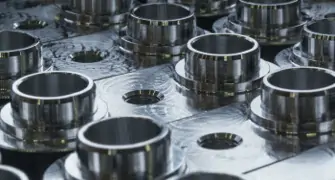
5-axis CNC machining has become a mainstream solution in 2026. It completes multi-sided processing in one clamping, eliminating repeated positioning errors. It delivers higher precision for instrument parts, mechanical sleeves, automation components and irregular mechanical parts, fully meeting high-standard export requirements.
Green and Low-Carbon Production Standards
Global customers increasingly prioritize environmentally friendly manufacturing. Modern CNC factories are shifting from traditional flood cooling to micro-lubrication and dry cutting technologies.
These methods reduce cutting fluid waste, lower surface oil contamination, and produce cleaner finished parts. Optimized energy-saving spindle systems also reduce power consumption. Green machining not only complies with international audit standards but also improves surface quality of aluminum, steel and stainless steel components.
Data-Based Quality Control
Modern precision manufacturing relies on traceable data rather than manual inspection alone.
Current CNC production records all machining parameters, tool conditions and processing data automatically. Combined with digital simulation before production, factories can avoid tool collision, dimensional deviation and design risks in advance. Full-process data traceability ensures reliable quality and supports customer quality audits and technical verification.
Unmanned Efficient Production
Automated loading, unloading and automatic tool changing systems allow continuous, stable, lights-out production.
Unmanned CNC processing greatly improves production capacity and shortens delivery cycles for batch orders. Intelligent fault prediction also reduces unexpected downtime, ensuring stable delivery for global mechanical equipment suppliers.
In 2026, high-quality CNC machining is defined by intelligence, stability, environmental compliance and full-process precision control. Factories that adopt modern upgrades can provide more reliable, high-precision mechanical parts for automation, instrumentation, machinery and industrial equipment worldwide.
- Why CNC Machining Is Non-Negotiable for High-Performance Drone UAV Components
- How Precision CNC Machining Improves the Performance of Professional Photography Accessories

Get an online quote and injection molding design analysis today.