

Three New CNC Machining Trends Redefining Precision Manufacturing in 2026
2026-05-17
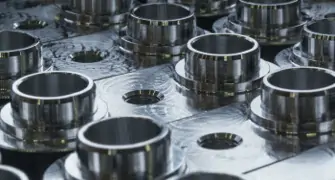
Traditional CNC machining has long relied on fixed programming, manual parameter tuning, and pure subtractive cutting. In 2026, precision manufacturing is evolving fast, driven by intelligence, hybrid processing, and stable low-carbon production. This article shares three practical, industry-leading CNC trends that are currently reshaping high-precision part production.
Table of Contents:
|
1. AI Closed-Loop Real-Time Machining |
|
2. Additive-Subtractive Hybrid CNC Processing |
|
3. Thermal-Stable Low-Carbon Precision Machining |
|
4. Final Thoughts |
1. AI Closed-Loop Real-Time Machining
AI is no longer just an auxiliary tool in CNC workshops. Modern CNC systems now support AI-native closed-loop optimization.
During cutting, the machine collects real-time data on spindle temperature, vibration, torque and material changes. The system automatically adjusts speed, feed rate and toolpath compensation without human operation.
This technology effectively reduces thermal deformation and machining errors, greatly improving dimensional consistency for aluminum alloy parts, optical components and medical precision parts. It lowers scrap rates and shortens setup time significantly.
2. Additive-Subtractive Hybrid CNC Processing
Pure subtractive CNC struggles with complex hollow structures, thin-wall parts and special-shaped curved components.
The new hybrid additive and subtractive machining combines metal 3D printing rapid forming with high-precision CNC milling.
First, additive manufacturing quickly completes complex internal structures and rough shapes. Then CNC finishing ensures precise dimension control and smooth surface quality.
This process solves the traditional problems of low material utilization, complicated fixtures and unstable precision for complex parts. It shortens production cycles and improves yield for customized precision components.
3. Thermal-Stable Low-Carbon Precision Machining
For high-end precision machining, machine thermal stability directly determines long-term accuracy.
New-generation CNC equipment adopts intelligent temperature balance systems and digital twin thermal compensation technology. It stabilizes the overall machine temperature during continuous operation, minimizing thermal displacement errors.
Optimized cutting parameter libraries also reduce tool wear and unnecessary energy consumption. This trend enables factories to achieve high precision + stable mass production + greener processing, which has become an important evaluation standard for international customers.
Final Thoughts
CNC machining is moving from mechanical precision to intelligent precision. AI real-time optimization, hybrid processing and thermally stable low-carbon manufacturing are no longer futuristic concepts but mainstream upgrades for 2026 and beyond.
Manufacturers who adopt these new technologies can deliver more consistent, complex and high-quality precision parts while improving production efficiency and market competitiveness.
- CNC Precision Machining Optimization: Key Tips to Improve Efficiency & Part Quality
- Optimization of High-Speed Milling Parameters for Thin-Walled Aluminum Parts: Balancing Precision and Efficiency

Get an online quote and injection molding design analysis today.