Rapid Prototyping and Small-Batch CNC Machining in China
2026-05-05
The path from concept to commercial product requires rapid iteration, comprehensive testing, and cost-effective validation. For product developers, engineers, and entrepreneurs, accessing
China CNC machining services for prototyping and low-volume production has become an essential competitive advantage. What once required expensive domestic machining can now be accomplished with rapid turnaround times and significant cost savings.
This guide explores how to effectively leverage
Chinese CNC prototyping services to accelerate your product development cycle while managing quality and cost considerations.
Despite the availability of domestic prototyping services, many companies increasingly turn to Chinese facilities for their prototyping needs:
Cost Advantages:
-
Machining rates 60-80% lower than typical US rates
-
Reduced total prototype costs enable more iterations
-
Budget supports additional design validation
-
Lower investment per prototype
Capability Access:
-
Advanced 5-axis machining for complex geometries
-
Wide material selection including specialty alloys
-
Surface finish options comparable to production parts
-
DFM expertise from experienced engineering teams
Speed Considerations:
When optimized properly, China prototyping can be faster than domestic alternatives:
-
Simple parts: 3-5 days production, 5-10 days international shipping
-
Complex parts: 7-14 days production, 3-5 days air shipping if urgent
-
Total timeline often comparable to domestic with faster production
Understanding the distinction helps set appropriate expectations:
Prototyping Priorities:
-
Functional validation over cosmetic perfection
-
Speed over surface finish
-
Iterative design refinement
-
Multiple design iterations
-
Material equivalence to production
Production Priorities:
-
Consistent quality across volumes
-
Optimized cost per unit
-
Maximum efficiency
-
Tight tolerances maintained
-
Surface finish specifications
Standard Rapid Service:
-
Lead time: 3-7 business days
-
1-10 pieces typical
-
Standard materials from stock
-
Machine finish only
-
Competitive pricing
Express/Urgent Service:
-
Lead time: 24-72 hours
-
1-5 pieces typical
-
Limited material selection
-
Additional setup charges may apply
-
Available for straightforward parts
DFM-First Approach:
Quality-focused services review designs before quoting:
-
Manufacturing feasibility assessment
-
Design optimization suggestions
-
Tolerance recommendations based on function
-
Material selection guidance
-
Cost reduction opportunities
Strategic planning minimizes total prototype timeline:
Week 1:
-
Monday: Submit CAD files and requirements
-
Tuesday-Wednesday: DFM review and quote
-
Thursday: Order confirmation and production start
-
Friday: Machining complete (simple parts)
Week 2:
-
Monday-Tuesday: Machining complete (complex parts)
-
Wednesday: Quality inspection and packaging
-
Thursday: Shipment to international carrier
-
Friday: Carrier pickup and transit begins
Timeline Variables:
Multiple factors affect actual timeline:
-
Part complexity and machine time requirements
-
Material availability (stock vs. procurement)
-
Surface finish requirements
-
Factory current workload
-
Shipping method selected
Moving beyond prototyping into small-batch production requires different considerations:
Small-Batch Definitions:
|
Volume Range
|
Typical Lead Time
|
Cost Characteristics
|
|
1-10 pcs
|
3-7 days
|
Highest per-unit cost
|
|
11-50 pcs
|
7-14 days
|
Moderate per-unit reduction
|
|
51-200 pcs
|
10-21 days
|
Significant per-unit savings
|
|
200-500 pcs
|
14-30 days
|
Approach production economics
|
Setup Cost Amortization:
Small-batch economics depend heavily on setup cost spread:
-
Higher volumes spread setup across more units
-
Design for manufacturing reduces per-unit cost
-
Standardization enables efficient production
-
Fixture investment worthwhile for larger runs
Maximizing small-batch value requires design optimization:
DFM Principles for CNC Machining:
Wall Thickness:
-
Minimum 0.8mm for aluminum, 1.0mm for steel
-
Consistent thickness reduces warping
-
Heavy sections require balanced design
Tolerances:
-
Only specify tight tolerances where function requires
-
Standard tolerances reduce cost significantly
-
GD&T communicates requirements clearly
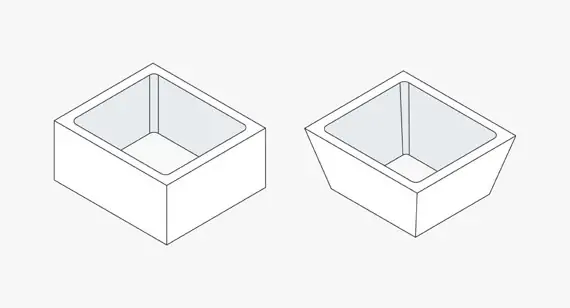
Draft Angles:
-
Internal vertical walls may require draft
-
Molded parts require draft; CNC machined don’t
-
Vertical walls possible for machined parts
Hidden Features:
-
Through-holes more economical than blind holes
-
Simple pockets better than complex internal geometries
-
Accessibility affects tooling requirements
Material Selection:
-
Standard materials reduce cost and lead time
-
Stock materials faster than special orders
-
Consider machinability differences
Effective prototyping leverages Chinese services through structured iteration:
Phase 1: Concept Validation
-
Simple prototypes testing core functionality
-
Multiple design variations tested
-
Focus on identifying fundamental issues
-
Rapid, low-cost exploration
Phase 2: Design Refinement
-
Incorporate lessons from concept testing
-
Optimize design for manufacturing
-
Test critical tolerances and fits
-
Material selection validation
Phase 3: Pre-Production Preparation
-
Production-representative prototypes
-
Assembly and integration testing
-
Performance validation
-
Documentation preparation
Phase 4: Production Qualification
-
First article inspection
-
Process capability studies
-
Supplier qualification
-
Process refinement for production
Understanding prototype quality requirements prevents over-specification:
When Prototype Quality Matters:
-
Functional fit testing with production components
-
Fatigue or endurance testing
-
Environmental testing
-
Regulatory submission prototypes
-
Customer demonstration samples
When Prototype Quality is Secondary:
-
Conceptual validation
-
Basic assembly testing
-
Design iteration exploration
-
Internal engineering review
-
Marketing photography
Balancing inspection rigor with prototype timelines:
Essential Prototype Inspection:
-
Dimensional verification against drawings
-
Visual inspection for obvious defects
-
Basic function verification
-
Photography documentation
Extended Inspection (when justified):
-
CMM measurement of critical features
-
Surface finish verification
-
Material certification
-
First article inspection packages
Clear communication prevents prototype quality surprises:
-
Indicate prototype vs. production intent with quote requests
-
Mark critical dimensions requiring verification
-
Specify acceptance criteria for fit/function testing
-
Request photographs before shipping if concerned
-
Discuss concerns with supplier before production
Strategic approaches get more from prototyping budgets:
Consolidate Designs:
-
Test multiple features in single prototype
-
Design test vehicles with multiple variations
-
Reduce total prototype count needed
Leverage Quick-Turn Services:
-
Reserve urgent service for truly urgent needs
-
Plan ahead to use standard lead times
-
Batch multiple prototypes for same shipment
Optimize Design for Machining:
-
Simplify geometries without compromising function
-
Use standard materials from stock
-
Minimize special surface finish requirements
-
Design for efficient setup
Establish Working Relationships:
-
Repeat suppliers learn your requirements
-
Communication improves with familiarity
-
Pricing often improves for established customers
-
Priority access available for relationship partners
Common prototype cost traps and how to avoid them:
Revision Cycles:
-
Provide complete specifications initially
-
Review designs for completeness before ordering
-
Clarify ambiguous requirements before production
-
Communicate changes immediately when necessary
Expediting Fees:
-
Build appropriate lead time into project plans
-
Reserve urgent services for genuine emergencies
-
Plan ordering to avoid last-minute rush needs
Shipping Premiums:
-
Standard production can ship via sea freight
-
Reserve air/express for genuine time constraints
-
Consolidate orders to maximize shipping efficiency
Quality Disputes:
-
Clear specifications prevent disagreement
-
Prototype samples establish baseline
-
Document accepted quality level
-
Maintain open communication about concerns
Complete technical packages ensure accurate quoting:
Essential Information:
-
3D CAD files (STEP, IGES, Parasolid formats)
-
2D drawings with dimensions and tolerances
-
Material specifications
-
Quantity required
-
Surface finish requirements
-
Any special requirements or notes
Helpful Additional Information:
-
Application and function description
-
Previous prototype results
-
Known problem areas
-
Reference samples or images
-
Timeline constraints
Effective communication maximizes prototype value:
-
Be specific about priorities – Speed vs. quality vs. cost
-
Mark critical features – Ensure dimensional accuracy where needed
-
Indicate tolerance intent – Function-critical vs. nominal
-
Share context – Understanding enables better support
-
Ask questions – Engineering collaboration improves outcomes
Long-term relationships with prototyping suppliers compound benefits:
Partnership Advantages:
-
Faster response times for established customers
-
Familiarity with your requirements and preferences
-
DFM suggestions tailored to your applications
-
Priority capacity allocation when needed
-
Pricing improvements with volume
Partnership Development:
-
Start with simple projects to establish relationship
-
Provide clear feedback on prototype quality
-
Pay promptly and maintain professional communication
-
Communicate future needs to enable planning
-
Treat suppliers as partners, not vendors
China CNC prototyping supports diverse sectors:
Consumer Electronics:
-
Product enclosures and housings
-
Functional prototypes for testing
-
Design validation samples
-
Marketing and exhibition prototypes
Medical Devices:
-
Concept models for stakeholder review
-
Functional prototypes for testing
-
Pre-clinical evaluation samples
-
Production representative parts
Aerospace and Defense:
-
Subsystem component prototypes
-
Design validation testing
-
Qualification test articles
-
Low-rate initial production
Automotive:
-
Concept vehicle components
-
Design verification prototypes
-
Tooling tryout parts
-
Limited production runs
Robotics and Automation:
-
Mechanism prototypes
-
Functional testing components
-
Integration test articles
-
Low-volume production parts
Access to China CNC machining services for prototyping and small-batch production represents a significant competitive advantage for product developers. The combination of lower costs, advanced capabilities, and responsive service enables more design iterations, comprehensive testing, and ultimately better products.
Success requires:
-
Clear specification of prototype vs. production requirements
-
Effective communication with service providers
-
Design for manufacturing optimization
-
Strategic use of rapid services
-
Partnership development for ongoing needs
At Anxin-CNC, we specialize in supporting product development through rapid prototyping and small-batch production. Our engineering team provides DFM guidance, material selection support, and responsive service to accelerate your path from concept to market. Contact us to discuss your prototyping needs.