
Difference Between 3-Axis and 5-Axis CNC Machining
2026-09-14
CNC machining is essential in modern precision manufacturing. 3-axis and 5-axis CNC machining are the two most common manufacturing methods. Many manufacturers struggle to tell them apart and choose the right one for their projects. This article briefly compares their core differences, advantages and ideal applications.
Table of Contents:
|
1.Basic Working Principle |
|
2.Machining Capability & Complexity |
|
3.Precision & Surface Finish |
|
4.Efficiency & Cost |
|
5.Typical Applications |
Basic Working Principle
3-Axis CNC Machining
A 3-axis machine moves the cutting tool along three linear axes: X, Y and Z. The workpiece stays fixed during processing. It can only machine the top and simple side surfaces of a part from a vertical angle. Multi-sided workpieces require manual re-clamping and repositioning.
5-Axis CNC Machining
Based on the X, Y and Z linear axes, a 5-axis machine adds two rotating axes. It allows the tool or workpiece to tilt and rotate freely. This enables cutting from almost any angle in one single setup.
Machining Capability & Complexity
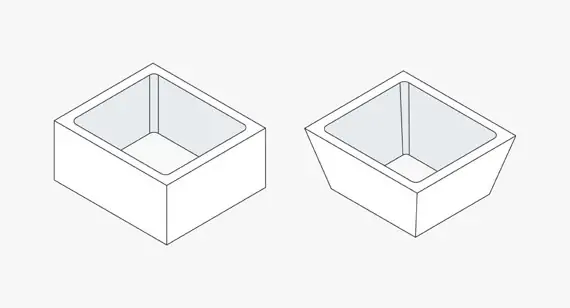
3-axis machining is limited to simple geometries, including flat surfaces, straight slots and standard holes. It cannot handle undercuts, deep cavities or complex 3D curved surfaces.
In contrast, 5-axis machining easily handles intricate structures such as turbine blades, impellers and curved mold surfaces. It supports complex contours that are impossible for standard 3-axis equipment.
Precision & Surface Finish
3-axis processing needs repeated clamping for multi-angle machining, which causes minor positioning errors and reduces accuracy. Complex surfaces often leave visible tool marks and require manual polishing afterward.
5-axis machining completes full processing in one clamping, eliminating cumulative positioning errors. The tool always maintains an optimal cutting angle, delivering smoother surface finishes and tighter dimensional tolerances. It usually needs no secondary finishing.
Efficiency & Cost
3-axis machines feature low equipment, maintenance and labor costs. They are simple to program and ideal for mass production of basic parts. However, frequent re-clamping slows down the workflow for complex workpieces.
5-axis machining greatly shortens production cycles by reducing setup times. It improves consistency and lowers defective rates for high-end parts. The downside is higher costs for equipment, software and skilled operators.
Typical Applications
3-Axis CNC
- Standard mechanical parts and flat components
- Simple fixtures, bases and regular molds
- Mass production of low-complexity parts
5-Axis CNC
- Aerospace turbine and engine components
- Medical implants and precision robotic parts
- Complex injection molds and automotive high-performance parts
3-axis and 5-axis CNC machining serve different manufacturing needs. 3-axis technology offers cost-effective solutions for conventional parts, while 5-axis technology empowers high-end precision manufacturing. Choosing the right machining method helps factories balance cost, efficiency and product quality.
- CNC Machining for Aerospace Components
- How CNC Machining, Turning, and 5-Axis Technology Are Shaping the UAV Industry

Get an online quote and injection molding design analysis today.