

CNC Machining: The Backbone of Modern Robot Manufacturing
2026-06-10
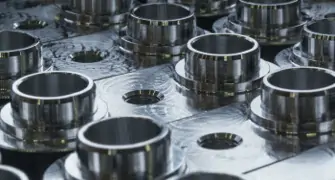
Robotics development relies heavily on high-precision mechanical components, and CNC machining has become the most reliable manufacturing solution for industrial robots and intelligent automation equipment. Its unique accuracy, stability, and customization capability directly determine robot performance, durability, and operational precision.
Table of Contents:
|
1. Why CNC Machining Matters for Robotics? |
|
2. Core Robot Components Made by CNC Machining |
|
3. Common Materials for Robotic CNC Parts |
Why CNC Machining Matters for Robotics?
Robots require consistent, repeatable, and precise movement, which cannot be achieved by ordinary manufacturing methods.
First, CNC machining delivers micron-level tight tolerances. Robot joints, transmission systems, and arm structures demand ultra-high precision to eliminate shaking, backlash, and positioning errors. Modern 3-axis and 5-axis CNC processing ensures stable dimensional accuracy for long-cycle robot operation.
Second, it supports lightweight and high-rigidity design. Most robot structural parts are made of aluminum alloys such as 6061 and 7075. CNC milling precisely removes excess material, reducing robot weight while maintaining structural strength, helping robots achieve faster movement and lower energy consumption.
Third, CNC is ideal for customized and low-to-medium batch production. The robotics industry features diverse product types and frequent design upgrades. Without mold limitations, CNC machining quickly produces prototypes and finished parts, greatly shortening robot R&D and iteration cycles.
Core Robot Components Made by CNC Machining
1. Robot Arm & Frame Structures
High-precision CNC-machined aluminum frames and arm links ensure overall stability, assembly accuracy, and load-bearing capacity.
2. Precision Joint & Transmission Parts
Gear housings, shafts, and joint modules rely on CNC tight-tolerance processing to guarantee smooth, low-noise, and high-precision motion.
3. End-Effector & Gripper Parts
Custom-machined gripper structures and tool adapters enable robots to perform stable grasping, handling, and processing tasks.
4. Sensor & Protective Housings
CNC-processed shells provide precise mounting positions, shock resistance, and stable protection for robot sensors and electronic modules.
Common Materials for Robotic CNC Parts
- Aluminum Alloy 6061/7075: Main material for robot arms and frames (lightweight & high strength)
- Stainless Steel: For wear-resistant and corrosion-resistant structural components
- PEEK & Engineering Plastics: For insulating, noise-reducing, and safe human-robot contact parts
As robotics moves toward higher precision, lighter weight, and smarter integration, CNC machining remains an irreplaceable core manufacturing technology. It supports the continuous upgrade of industrial automation, collaborative robots, and intelligent robotic equipment, laying a solid foundation for future robotic innovation.
- CNC Machining in Aerospace and Drone Industry
- Key Process Tips to Improve CNC Machining Precision & Yield

Get an online quote and injection molding design analysis today.