
The Next Edge in CNC Is Not the Machine—It’s the Flow Around It CNC machining is often judged by the machine: spindle speed, axis count, tolerance, rigidity. Those specifications still matter. But the…
(Content in this language is being translated. Showing English version.)
CNC machining is often judged by the machine: spindle speed, axis count, tolerance, rigidity. Those specifications still matter. But the real competitive gap in the CNC industry is shifting. It is no longer only about how well a machine cuts metal. It is about how well the entire system around the spindle—scheduling, tooling, automation, data, people, and energy—keeps value flowing.
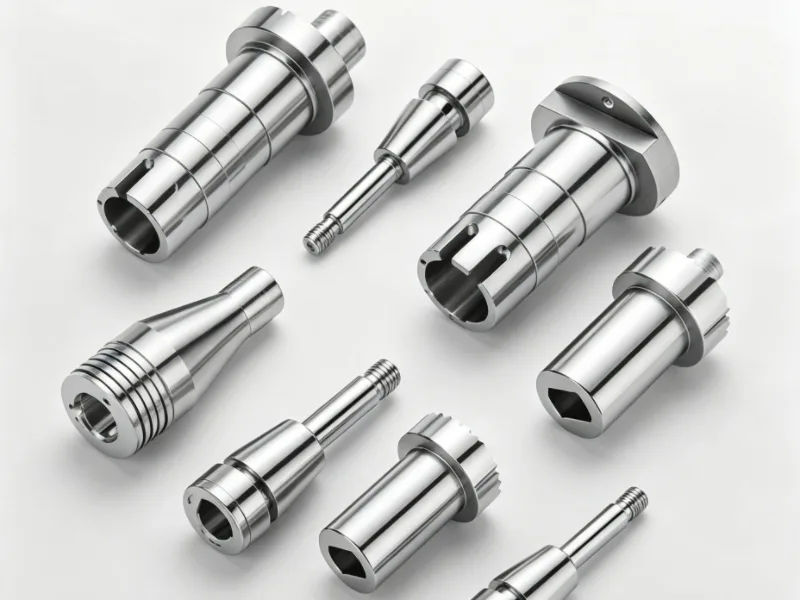
That shift changes how shops should think about investment. The winning question is not “What is the most advanced CNC machine available?” but “Where is value getting stuck, and what is the smallest change that removes the friction?”
1. Automation Should Follow the Bottleneck, Not the Hype
Robotic loading, pallet changers, and lights-out machining are no longer exotic. But automation delivers uneven results when it is added without a clear bottleneck. A robot loading a machine that is already waiting on tools, fixtures, or inspection does not create capacity. It simply automates the wait.
The more useful approach is to map the flow of a job: setup, programming, tool availability, machining, inspection, and transfer. Then automate the step that constrains spindle uptime most. Often that step is not the machine tool at all. It is setup changeover, tool pre-setting, or inspection queue.
Practical takeaway: Automate one constrained step first. Measure spindle utilization before and after. Expand only when the process is stable.
2. Data Is Only Valuable When It Changes a Decision
CNC machines already generate rich signals: spindle load, cycle time, alarm history, tool wear, energy draw, and maintenance events. The weakness is not data collection. It is decision design.
A dashboard that shows everything can hide the one metric that matters. Machine monitoring becomes powerful when it answers a specific question: Which machine is losing the most productive hours? Which tool fails earlier than expected? Which job consistently runs over quote? Which machine idles between shifts?
Connectivity also introduces risk. An exposed machine network can become an entry point for disruption. Segmentation, controlled remote access, and basic cybersecurity hygiene should be part of any connectivity plan—not an afterthought.
Practical takeaway: Choose one decision to improve—spindle utilization, unplanned downtime, or quoting accuracy—and collect only the data needed to support it.
3. Multi-Axis and Hybrid Machining Are About Fewer Handoffs
Five-axis machining and hybrid processes are often presented as capability upgrades. Their deeper value is handoff reduction. Fewer setups mean fewer fixtures, less queue time, lower accumulation of error, and less dependence on manual repositioning.
Hybrid machining—combining milling, turning, additive, or laser operations—can reduce assembly steps and material waste for high-value parts. It is not a universal answer. The economics work best where part complexity, material cost, or assembly risk is high enough to justify the process complexity.
Practical takeaway: Evaluate multi-axis or hybrid investment by the number of handoffs it removes and the setup time it eliminates—not by axis count alone.
4. The Skills Gap Is a System Design Problem
The CNC skills gap is often described as a shortage of machinists. It is also a shortage of transferable process knowledge. When setup decisions, tool selection logic, and troubleshooting intuition live only in a few experienced people, the shop becomes fragile.
Simulation, standardized tool libraries, documented setup sheets, and structured mentoring can turn tacit knowledge into a repeatable system. Simulation reduces crash risk during learning. Mentoring preserves judgment that software cannot teach. Standardization makes both scale.
Practical takeaway: Treat training as production infrastructure. Document setups, standardize tooling, and pair new operators with experienced machinists on real jobs.
5. Sustainability Is a Cost-Control Strategy in Disguise
Energy consumption, coolant management, chip recycling, and tool life affect both environmental impact and operating cost. The most durable sustainability improvements are usually the ones that also reduce waste or idle time.
Simple actions often reveal hidden losses: reducing idle spindle time, improving coolant filtration, recycling chips, extending tool life, and monitoring machines that draw power while not producing. These are not only environmental measures. They are efficiency measures.
Practical takeaway: Start with an energy and waste audit on the highest-utilization machines. Prioritize improvements that reduce cost as well as impact.
6. Flexibility Beats Specialization When Demand Shifts
Supply chains move. Volumes change. Materials change. Part designs change. CNC shops that can adapt quickly have an advantage over shops locked into highly specialized lines that cannot flex.
Flexible fixturing, quick-change tooling, standardized processes, digital quoting, and CAM automation all reduce response time. Speed and reliability are becoming differentiators alongside price.
Practical takeaway: Design for changeover speed and process repeatability. A flexible shop can chase opportunities that a rigid shop must decline.
7. A Practical Roadmap
For CNC shops planning the next phase of improvement:
· Improve spindle utilization through scheduling, tool management, and setup reduction.
· Automate the bottleneck—not the whole shop at once.
· Connect critical machines to a simple, reliable monitoring system.
· Standardize processes so quality does not depend on a few key people.
· Build cybersecurity into machine connectivity from the start.
· Measure energy and tool consumption to reduce waste and cost.
· Build a training pipeline with simulation, documentation, and mentorship.
The CNC industry’s next advantage is not a single machine specification. It is the ability to design a system where machines, people, data, and material flow work together. Precision has always been the standard in CNC machining. The new precision is operational precision—knowing where value gets stuck, removing that friction, and making improvement repeatable.
The shops that win will not simply buy better machines. They will build better flow around them.