

CNC Machining Applications in Automotive and New Energy Vehicle Manufacturing
2026-07-04
The automotive industry has always been one of the largest and most mature application scenarios for CNC precision machining. With the rapid shift from traditional fuel vehicles to new energy vehicles (NEVs), the automotive manufacturing sector has raised higher standards for component precision, lightweight performance, heat dissipation, and structural stability. As a flexible and high-precision manufacturing method, CNC machining perfectly matches the industry’s needs for prototype verification, customized fixtures, and mass-produced core parts.
Table of Contents:
|
1. CNC Machining for Traditional Fuel Vehicles |
|
2. CNC Machining for New Energy Vehicles |
|
3. Core Advantages of CNC Machining in Automotive Manufacturing |
This blog focuses on the practical applications and core advantages of CNC machining in both traditional automobiles and new energy vehicles.
1. CNC Machining for Traditional Fuel Vehicles
In fuel vehicle manufacturing, engine power output, gear transmission efficiency and chassis stability directly determine vehicle performance. CNC machining is widely used to produce high-tolerance core mechanical parts that require excellent wear resistance and assembly accuracy.
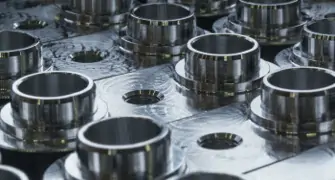
Common processed components include engine cylinder heads, pistons, valve seats, gearbox housings, brake calipers, steering system parts and suspension brackets. All these parts demand strict dimensional consistency to avoid vibration, noise or mechanical failure during long-distance driving.
Compared with casting and stamping, CNC machining provides higher surface smoothness and tighter tolerances. It is ideal for small-batch customization and aftermarket replacement parts, helping manufacturers improve product qualification rates and shorten production cycles.
2. CNC Machining for New Energy Vehicles
Different from fuel vehicles, new energy vehicles prioritize lightweight design, thermal management and electrical safety, which has become the main driving force for the rapid growth of automotive CNC processing demand.
Lightweight Structural Parts
To improve cruising range and energy efficiency, NEV manufacturers widely adopt lightweight aluminum alloy materials. CNC machined aluminum structural components replace heavy iron and steel parts, including vehicle body connection brackets, frame accessories and interior fixed parts. It effectively reduces overall vehicle weight while ensuring structural strength.
Battery System Components
The battery pack is the core of new energy vehicles. High-precision CNC machining produces battery trays, module fixing plates, sealing frames and insulating support parts. Strict flatness and dimensional accuracy ensure stable battery assembly, avoiding loose installation during vehicle vibration.
Motor and Electric Drive Parts
CNC processing is applied to motor housings, end covers, reducer shells and electric control unit brackets. The precise internal cavity structure ensures motor assembly accuracy and improves operational stability during high-speed rotation.
Heat Dissipation Components
New energy vehicles generate massive heat during charging and driving. CNC-machined water-cooled plates and heat dissipation profiles provide efficient heat exchange performance, protecting batteries and electrical components from overheating damage.
3. Core Advantages of CNC Machining in Automotive Manufacturing
First, high precision and stability. Automotive parts require micron-level tolerances, and CNC machining ensures uniform batch quality for mass production.
Second, strong customization capability. It supports rapid prototyping for new vehicle R&D, greatly shortening model iteration and testing cycles.
Third, wide material adaptability. It processes aluminum alloy, aviation aluminum, stainless steel and engineering plastics to meet different needs of strength, weight and corrosion resistance.
As the new energy vehicle market continues to expand, CNC precision machining has transformed from a traditional mechanical processing method into a core manufacturing technology for lightweight and high-efficiency automotive production. Whether for traditional power system parts or NEV battery, motor and heat dissipation components, CNC machining delivers reliable, high-precision and cost-effective manufacturing solutions for the automotive industry.
- How Precision CNC Machining Improves the Performance of Professional Photography Accessories
- What Global Brands Look for When Sourcing Custom Bicycle Components from China

Get an online quote and injection molding design analysis today.