

2026 Trends: Lightweight, High-Stiffness CNC Machining for Next-Gen Robots
2026-08-12
Introduction
In 2026, next-generation cobots — including Robots, AGVs, inspection and humanoid robots — are trending toward lighter weight, higher rigidity, faster movement and lower energy consumption.
Table of Contents
|
1.Introduction |
|
2. Why Lightweight & High-Stiffness Design Is Essential |
|
3. Key 2026 CNC Machining Technologies |
|
4.Core Industry Benefits |
|
5.Conclusion |
A key industry challenge has always been the trade-off between light weight and structural stability. Traditional machining either produces heavy, high-inertia parts or lightweight components with insufficient stiffness. Advanced precision CNC machining has become the core solution to balance lightweight design and mechanical performance for modern robotic manufacturing.
Why Lightweight & High-Stiffness Design Is Essential
Robot performance highly depends on the stiffness-to-weight ratio of CNC components:
• Cobots & humanoid robots: Lighter arm structures reduce joint load, enable smoother motion and safer human-machine interaction.
• Mobile robots (AGV/AMR): Optimized lightweight chassis greatly extend battery life while maintaining impact resistance.
• High-speed industrial robots: Low-inertial rigid parts minimize vibration, eliminate backlash and improve positioning accuracy.
Conventional 3-axis machining, casting and ordinary 3D printing can no longer meet the high-standard mass production requirements of 2026 robotic products.
Key 2026 CNC Machining Technologies
1. 5-Axis One-Setup Precision Machining
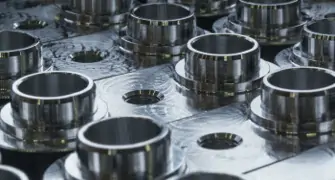
Single-clamping 5-axis processing completes complex curved structures, thin-wall frames and mounting surfaces in one cycle. It avoids cumulative clamping errors, improves consistency, and removes redundant material safely.
Topology-optimized CNC structures reduce part weight by 25%–40% while retaining high rigidity for load-bearing areas.
2. Low-Stress Thin-Wall Machining
Advanced toolpath optimization and anti-vibration fixtures support stable ultra-thin wall processing. It controls deformation tightly and maintains micron-level tolerance, making lightweight monolithic robot arms and joint housings mass-producible.
3. High-Performance Alloy Selection
2026 mainstream lightweight rigid materials for robot CNC parts:
• 7075 Aluminum: High strength-to-weight ratio for robot links and motor housings.
• Magnesium Alloy: Ultra-light weight for portable and miniature robots.
• TC4 Titanium: High fatigue resistance for medical and heavy-duty robot joints.
4. AI & Digital Twin Optimization
Modern CNC factories apply simulation analysis before production. Material removal paths are precisely calculated to remove only unnecessary volume, achieving the best balance between light weight, stiffness and durability.
Core Industry Benefits
• Higher motion accuracy and faster robot response speed
• Lower power consumption and longer battery life for mobile robots
• Reduced vibration, less wear and longer component service life
• Faster prototyping and mass production cycles
• Lower material waste and stable manufacturing costs
Typical CNC Robot Components in 2026
• Collaborative robot arm linkages & joint housings
• Lightweight gripper frames and end effector parts
• AGV and inspection robot chassis brackets
• Humanoid robot structural frames and sensor bases
• High-speed motor cooling housings
Conclusion
Lightweight and high-stiffness CNC machining is the mainstream development trend for next-gen robots in 2026. Advanced 5-axis processing, thin-wall stabilization technology and optimized alloy manufacturing help robot brands achieve better performance and market competitiveness.
- How CNC Machining Shapes the Future of UAVs
- 5 Quick Tips to Improve CNC Machining Accuracy & Batch Consistency

Get an online quote and injection molding design analysis today.